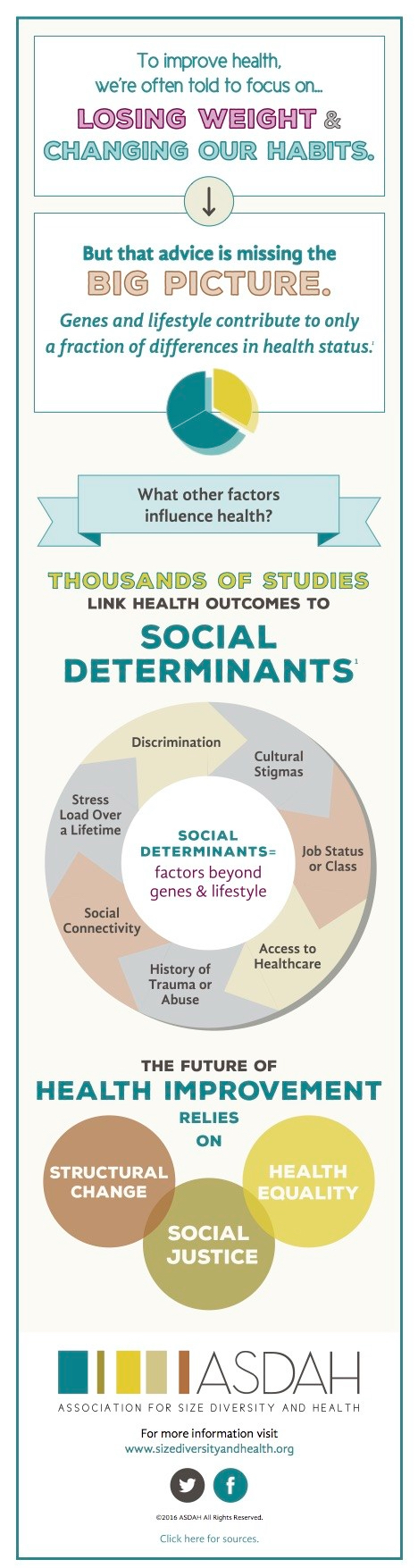
Source: ASDAH, 2017

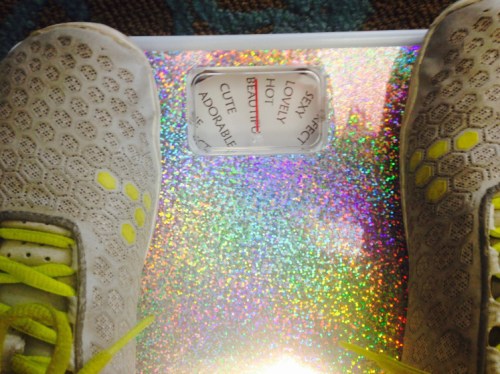
Yay! Scale by Marilyn Wann
My very first Health at Every Size® client gave me permission to share her story. She wrote this testimonial a few months ago, five years after our first consult. Continue reading
Posted in Food for Thought, Health at Every Size

Do you really need to kill yourself to save your life? You might think so, if you look at the way some health fanatics strictly follow their diet or exercise plans. However, not-so-novel research suggests that being healthy is much easier and more fun than we’ve made it out to be. In Healthy Pleasures, an old but timeless book, authors Robert Ornstein, PhD and Davis Sobel, MD identify life’s simple pleasures and describe the proven ways they contribute to health and well-being. Continue reading

Both intuitive and structured eating styles are compatible with a Health At Every Size® approach. But which is right for you? Take this quick quiz to find out:
If you answered ‘yes’ to both questions, intuitive eating may be right for you.
If you answered ‘no’ to one or both questions, start with structured eating. Continue reading
Posted in Food for Thought, Health at Every Size, Nutrition Info
After nearly five years, I have decided to leave my job in medical weight management to practice a Health at Every Size® (HAES®) approach.
Here’s why:
Dieting does more harm than good. Research shows that dieting is more likely to lead to weight gain than weight loss. A review of 31 weight loss studies found that dieting was ineffective at producing long term weight loss, and one-third to two-thirds of dieters gained more weight than they lost (Mann et al, 2007). Calorie restriction leads to preoccupation with food, binge eating and weight obsession.
Weight loss messages contribute to weight stigma. Weight loss messages perpetuate the idea that anyone can lose weight, and that “overweight” people are lazy or lack willpower. In reality, weight is determined by a complex interaction between genes, environment and social influences. Once a set-point weight range is established, the brain works hard to defend it (Sumatran and Proietto, 2013). Size diversity should be respected and embraced, just like other types of diversity.
Weight loss is not necessary for health improvement. People who exercise regularly, eat a healthy diet, and practice other forms of self-care can improve their health, without losing weight (Matheson et al. 2012; Schaefer and Magnuson, 2014.)
Recent research provides some insight as to why maintaining weight loss is especially difficult. View this clip from the Weight of the Nation documentary series for an explanation.
Note: You don’t need to pursue weight loss to improve your health. Learn about a Health at Every Size approach.

I wrote this post as a participant in the Eat, Play, Love blog carnival hosted by Meals Matter and Dairy Council of California to share ideas on positive and fun ways to teach children healthy eating habits. A list of other registered dietitians and moms who are participating in the carnival will be listed at the bottom of this post or can be found on Meals Matter.
As a dietitian with the KidShape program, I have learned the magic of making mealtimes fun in helping kids to eat healthier. Here are some tips I’ve learned from KidShape families:
The Best-Kept Secret for Raising Healthy Eaters, Maryann Jacobsen, MS, RD
Feeding is Love, Jill Castle, MS, RD, LDN
5 Quick Ways to Prepare Veggies with Maximum Flavor, Dayle Hayes, MS, RD
The Art of Dinnertime, Elana Natker, MS, RD
Children Don’t Need a Short Order Cook, Christy Slaughter
Cut to the Point – My Foodie Rules, Glenda Gourley
Eat, Play, Love – A Challenge for Families, Alysa Bajenaru, RD
Eat, Play, Love ~ Raising Healthy Eaters, Kia Robertson
Get Kids Cooking, Jessica Fishman Levinson, MS, RD, CDN
Kid-Friendly Kitchen Gear Gets Them Cooking, Katie Sullivan Morford, MS, RD
Kids that Can Cook Make Better Food Choices, Glenda Gourley
Making Mealtime Fun, Nicole Geurin, RD
My No Junk Food Journey – Want to Come Along? , Kristine Lockwood
My Recipe for Raising Healthy Eaters: Eat Like the French, Bridget Swinney MS, RD, LD
Playing with Dough and the Edible Gift of Thyme, Robin Plotkin, RD, LD
Picky Eaters Will Eat Vegetables, Theresa Grisanti, MA
Raising a Healthy Eater, Danielle Omar, MS, RD
Putting the Ease in Healthy Family Eating, Connie Evers, MS, RD, LD
Raising Healthy Eaters Blog Carnival & Chat Roundup, Ann Dunaway Teh, MS, RD, LD
Soccer Mom Soapbox, Sally Kuzemchak, MS, RD
Teenagers Can Be Trying But Don’t Give UpDiane Welland MS, RD
What My Kids Taught Me About Eating Mindfully, Michelle May, MD
 I recently finished reading Health at Every Size by Linda Bacon, PhD. Bacon agues that promoting weight loss is ineffective in improving health over the long-term. According to the book:
The Health at Every Size (HAES) approach emphasizes:
With the HAES approach, the fundamental principles of nutrition remain the same. It’s still important to eat a variety of fruits, vegetables, whole grains, lean protein and unsaturated fats from mostly unprocessed sources. It’s still important to eat breakfast and drink water. If you follow these guidelines and lose weight, that’s fine. But if you follow these guidelines and don’t lose weight, that just may be fine too. What are your thoughts on HAES?
For additional information on HAES, check out:
Also check out this short clip by the Surgeon General, emphasizing a Health at Every Size approach:
References:
Posted in Book Reviews, Food for Thought, Nutrition Info, Videos
Tagged Health at Every Size
“Persistence, not perfection, is the key to success.”

On behalf of National Public Health Week, I wanted to share the below video. Enjoy!


 Nicole Geurin, MPH, RD