Category Archives: Nutrition Info

Eat Right with Color

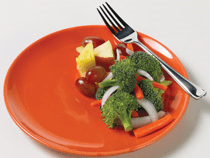
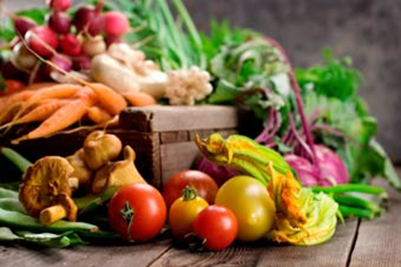
imageMarch is here, and that means it’s officially National Nutrition Month®!  I love this year’s theme, Eat Right with Color.  A wonderful way to boost the nutritional quality of your diet and improve your health is to add more colorful fruits and vegetables to your meals and snacks.  Different colored fruits and vegetables contain different types of cancer-fighting antioxidants, which is why we should eat a rainbow of colorful fruits and vegetables.

How many fruits and vegetables should we eat each day?

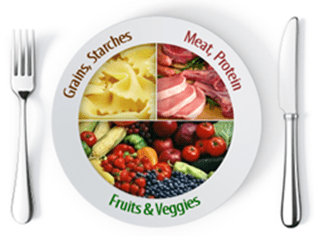
imageThe slogan used to be “5 A Day for Better Health,” but now we’ve discovered that’s not enough for most individuals to experience the maximum health benefits.  Today, the Produce for Better Health Foundation’s slogan is “More Matters,” because most people will improve their health by increasing the amount of fruits and vegetables they eat.  The new 2010 Dietary Guidelines for Americans recommends filling half your plate with fruits and vegetables at every meal and snack.  This will help ensure you’re eating enough nutrients and may help prevent overindulging in higher calorie foods.

Fill half your plate with fruits and vegetables.  Now, that’s Eating Right with Color!image

Nutrition and Breast Cancer

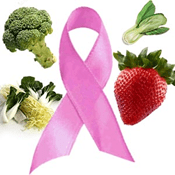
A dear relative of mine was recently diagnosed with breast cancer.  She asked imageme for this information, so I thought I would share it with everyone, in case you or someone you know is also battling breast cancer.

Breast Cancer-Fighting Diet Tips

  • Aim for 5-9 colorful servings of fruits and vegetables.  Fruits and veggies are loaded with healthful nutrients, fiber and antioxidants.  Be sure to include bright orange, dark green, and deep red fruits and vegetables.
  • Include 3-6 servings of whole grains each day.  Whole grain foods also contain important cancer-fighting nutrients.  Replace refined grains (white bread, white rice, etc.) with a variety of whole grain foods like brown rice, whole wheat bread/pasta, and popcorn.
  • Use garlic, curry, and other herbs and spices liberally when cooking.  These foods pack a cancer-fighting phytochemical punch!
  • Aim for a diet that is overall low in fat.  Especially limit fat intake from processed foods, high-fat dairy and red meat.  Include some healthy unsaturated fats from fish, nuts, flaxseed, olive oil and/or avocado.
  • Avoid alcohol or limit to 1 drink per day, max.  Alcohol has a role in promoting estrogen receptor-positive tumors.
  • Reduce the amount of sugary and refined carbohydrate foods you eat, like soda, candy, and dessert-like breads.  These types of foods fuel cancer cells.
  • Avoid supplements.  Get your nutrients naturally from food.  Supplements contain concentrated ingredients which may actually promote cancer.  A daily, regular multivitamin is probably okay.image
  • Soy intake has been found to be protective of breast cancer in younger women.  Soy intake is controversial in women with estrogen-positive breast cancer.  Considering all the evidence, I recommend avoiding soy supplements (e.g. protein bars and powders made from soy protein) but including up to 1-2 daily servings of whole soy foods (e.g. edamame or tofu) for women who are currently cancer-free.

Note: If you are currently undergoing cancer treatment, the most important thing to avoid is losing lean body mass.  You may experience changes in appetite and taste.  Try to a healthful meal, but if you are struggling, eat whatever you can or try nutritional supplements.

For additional information, check out these wonderful resources:

References:

Escott-Stump, Sylvia. Nutrition and Diagnosis-Related Care, Sixth Edition. Baltimore Maryland: Lippincott Williams & Wilkins. 2008.

10 Tips to Stay Healthy on a Cruise

imageI love cruises. Cruises offer an abundance of fun activities, and an opportunity to explore new places. However, many people worry about gaining weight on their cruise vacation, because of the plethora of all-you-can-eat food. These ten tips will enable you to enjoy your cruise vacation while avoiding unwanted weight gain.

Healthy eating tips:

1. Bring some whole fruit from the buffet back to your stateroom to snack on in-between meals if you’re hungry. This nutritious snack will help prevent you from overeating at meals, and the sweetness may help keep you from reaching for seconds on dessert.

2. At dinner, consider trying the dishes recommended by the Spa. On many cruise lines, the healthiest choices are marked on the menu with the name of the ship’s spa or fitness facility. If it sounds appetizing, try it!

3. Eat mindfully.  Honor your body’s hunger, fullness and appetite cues.

4. Enjoy one delicious dessert per day. This is vacation, after all. If you’re feeling full by the time your dessert arrives after dinner, consider splitting it with a friend or just enjoying a few delectable bites.

5. Stock your mini-bar with your own healthy snacks.   Order snacks from room service, or smuggle items from the buffet. Yogurt, milk, chopped fruit and Swiss oatmeal (muesli) are some of my favorite snacks to stock. Don’t forget to smuggle some silverware as well!

Activity-related tips:

6. Plan an active excursion. Cruise ports of call provide a wonderful opportunity for an exciting, active adventure you will never forget. On my past cruise vacations, I have been hiking, snorkeling, glacier trekking, bicycling, horseback riding, rafting, kayaking, and surfing. Your cruise line will likely provide you with a list of recommended excursions at each place you visit. These excursions will be graded according to physical activity level. Choose the most active excursion within your physical abilities.

7. Stay active on sea days. Visit the fitness center, take a fitness class, walk around the deck, or tread water in the pool.

8. Take the stairs. Cruise ships provide an excellent opportunity for stair climbing. Give your metabolism a quick boost by taking the stairs to get to the next deck rather than waiting for the elevator. Challenge yourself to see how many flights your can climb.

9. Participate in cruise competitions. Cruise ships often hold competitions for valuable prizes such as luggage tags and T-Shirts. Competitions I have participated in on past cruises include ping pong tournaments, 3-on-3 basketball, scavenger hunts, dodge ball, water volleyball matches, and a Wii tennis challenge. Take a look in your schedule of daily activities to find a competition that interests you.

10. Go dancing. From line dancing, to ballroom waltzing, to nightclub boogying, cruise ships offer dancing opportunities to fit every style. Dancing is a great form of physical activity that makes exercise feel more like a party and less like a workout!

Eat Your Way to Happiness: Book Review

imageEat Your Way to Happiness, by Elizabeth Somer, MA, RD, is a fun read that is packed with good nutrition advice.  There is no doubt our lifestyle and food choices can affect our mood.  However, with my newfound Health at Every Size approach to health, I’m skeptical that this book will make you “blissfully thin,” a term to which the book constantly alludes.  I think that self-acceptance, combined with the habits promoted in the book, will make you blissful at weight that’s healthy for you.
Nevertheless, I highly recommend this book for it’s terrific nutrition advice and explanation of how food affects our mood.  Some of my favorite nutrition “secrets” in this book are:

  1. Eat Real 75% of the Time: “Eating real” means choosing foods that are as close to their natural form as possible, with minimal processing and refinement.
  2. Follow the 1-2-3 Rule for Breakfast:
    1. One to three servings of a quality, high-fiber carbohydrate
    2. Two servings of fruits or vegetables
    3. One protein or dairy
  3. Choose High Quality Carbs: As in whole grains, not refined.
  4. Adopt the 6% Solution: Aim for only 6% of your total calories to come from added sugar.  Not 25%, which is where the average American is at right now.  For a 2000-calorie diet, 6% translates to 30 grams (2 Tablespoons) of added sugar.  This does not include sugar found naturally in fruit or dairy, so eat plenty of these!
  5.  Sprinkle it with Super Mood Foods: Amp up your already healthy diet by sprinkling in some “super mood foods.”  These include:
    • Leafy greens
    • Nuts and legumes
    • Dark orange veggies
    • Berries and citrus fruits
    • And many more!
  6. The One Habit Your Must Embrace to Be Happy, Fit and Healthy: Exercise.  Period.  According to Somer, "Nothing you do will have as big an impact on your weight, as well as your mood and health both today and in the future, as exercise.”  Exercise gives you a natural endorphin rush, boosts self-confidence, fights fatigue, soothes stress and enhances sleep, all which lead to improved mood.

Learn more at the book’s website: Eat Your Way To Happiness.  Also available on Amazon.

Eat Your Way to Happiness Video

Health at Every Size

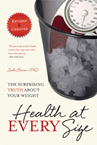
imageI recently finished reading Health at Every Size by Linda Bacon, PhD.  Bacon agues that promoting weight loss is ineffective in improving health over the long-term.  According to the book:
  • The vast majority of dieters regain their weight. There is no method proven effective for weight loss maintenance.
  • Research is emerging showing that fitness, not fatness, is associated more strongly with health and longevity (1,2,3).
  • Preoccupation with weight can be psychologically damaging and may lead to disordered eating (4,5).
  • People of any size can improve their health and reduce their risk of chronic disease by eating healthfully and being physically active, regardless of whether or not they lose weight (6,7)
  • No study has ever shown that weight loss actually prolongs life.

The Health at Every Size (HAES) approach emphasizes:

  • Self-acceptance regardless of weight, size, or shape
  • Physical activity for enjoyment and enhanced quality of life
  • Normalized eating in response to physiologic hunger and fullness cues rather than external guidelines or rules
  • An approach to healthy living that does not necessarily involve weight loss for overweight individuals

With the HAES approach, the fundamental principles of nutrition remain the same.  It’s still important to eat a variety of fruits, vegetables, whole grains, lean protein and unsaturated fats from mostly unprocessed sources.  It’s still important to eat breakfast and drink water.  If you follow these guidelines and lose weight, that’s fine.  But if you follow these guidelines and don’t lose weight, that just may be fine too.  What are your thoughts on HAES?

For additional information on HAES, check out:

Also check out this short clip by the Surgeon General, emphasizing a Health at Every Size approach:

References:

  1. Barlow CE, Kohl HW, Gibbons LW, Blair SN. Physical fitness, mortality and obesity. Int J Obes Relat Metab Disord. 1995;19(suppl4):S41-S44.
  2. Church TS, Cheng YJ, Earnest CP, et al. Exercise capacity and body composition as predictors of mortality among men with diabetes. Diabetes Care. 2004;27:83-88. Abstract
  3. Katzmarzyk PT, Church TS, Janssen I, Ross R, Blair SN. Metabolic syndrome, obesity, and mortality: impact of cardiorespiratory fitness. Diabetes Care. 2005;28:391-397. Abstract
  4. Gaesser GA. Big Fat Lies. Carlsbad, Calif: Gurze Books; 2002.
  5. Campos P. The Obesity Myth: Why America’s Obsession With Weight Is Hazardous to Your Health. New York: Gotham Books; 2004.
  6. Barnard RJ, Jung T, Inkeles SB. Diet and exercise in the treatment of non insulin dependent diabetes. Diabetes Care. 1994;17:1469-1472. Abstract
  7. Tremblay A, Despres JP, Maheux J, et al. Normalization of the metabolic profile in obese women by exercise and a low fat diet. Med Sci Sports Exerc. 1991;23:1326-1331. Abstract

Food for Thought: Calorie and Cost Comparison

Snack Comparisons- calories and cost

Choose a healthy snack today and SAVE!

Food for Thought

“Those who take medicine and neglect their diet waste the skill of the physician.” –Chinese Proverb

image

4 Tips to Avoid the Afternoon Slump

image A lawyer-to-be friend of mine who is studying for the bar asked me today for tips to help her avoid the afternoon slump.  I thought this was an excellent question, so I decided to blog about it.  Here are 4 foolproof tricks to help you avoid the afternoon slump:

  • Eat a light lunch: When you eat a meal, blood is directed to your stomach to help it digest the food.  The more calories in the meal, the more blood that will be sent to your stomach.  The more blood sent to your stomach, the less leftover for your brain. So, by keeping your lunch light, you will help save some blood to keep your brain neurons firing.  Some excellent light lunches include:
  • Eat 1-2 healthy snacks: If you’re going to eat a light lunch, you will still need some energy to help fuel your brain throughout the day.  So, pre-plan 1-2 healthy “power” snacks.  A power snack is about 200 calories and combines fiber and protein.  Some ideas include:
    • An apple + 1 ounce walnuts
    • Baby carrots, celery sticks + 1 Tablespoon lowfat ranch dip
    • 6 whole-grain crackers + 2 Tablespoons hummus
    • 1 orange + 1 cup lowfat yogurt
  • Take a physical activity break: This may just be the most important tip to keep that afternoon slump at bay.  When you feel your eyes glazing over and a yawn coming on, its time to take a physical activity break.  10 minutes is all you need to get the blood pumping and send it back to your brain.  Great physical activity breaks include:
    • Going for a walk outside
    • Arm circles, marching in place and jumping jacks
    • Light stretching or yoga
  • Get enough sleep at night: None of these tips will keep you from dozing off if you’re sleep deprived.  Aim for 8 hours of restful sleep each night.  The good news is that eating healthfully and taking physical activity breaks will actually help you to sleep better.

With these 4 tips combined, you will be sure to be Zzzz-Free in the afternoon!

12 Year Old Kicks Off A Fast Food Free Pledge for Earth Day

image

This 12-year-old, Koa Halpern, is on a mission to change the world.  His goal: to encourage others to go without fast food for 2 weeks in honor of Earth Day.  According to Koa, if just one person stopped eating fast food for just 2 weeks he or she would:

  • Save 3,222 gallons of water that would be used for livestock
  • Save 9.4 pounds of grain used for livestock feed
  • Protect 285.4 square feet of rain forest from being cut down to graze cattle
  • Prevent 15.4pounds of manure from being created (source www.wannaveg.com)

Koa’s website, http://fastfoodfree.org, provides ideas for alternatives to fast food, information about the detriments of processed food, and the opportunity to sign his pledge to go Fast Food Free for 2 weeks.  If a 12-year-old can do it… so can we!

It’s Strawberry Season!

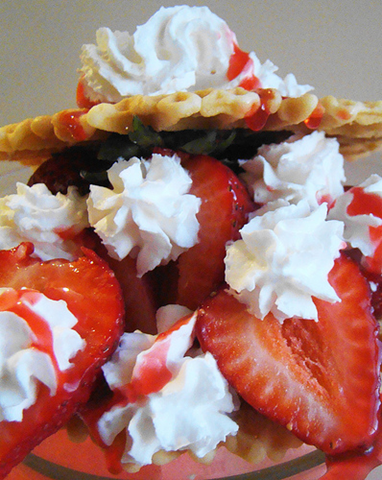
Strawberries are coming into season right now!  Did you know that 1 serving of strawberries has even more vitamin C than an orange?  It’s true! Strawberries pack a powerful nutrition punch… and for only 43 calories per serving.  I love adding strawberries to my morning oatmeal, yogurt snack, or just eating them plain. Here are some fun pictures to get you thinking about strawberries!

image image image image 

Image courtesy: 12, 3, 4