Author Archives: Nicole Geurin, MPH, RD

Contest: Win a Free $20 Amazon Gift Card!

That’s right, I’m giving away a free gift card just in time for the holidays, and you could be the lucky winner! Here’s how:

  1. Read any of the 3 blog posts below, titled “The Free Nutrition Tools You’re Missing Out On”
  2. Answer the 2 quick poll questions at the end of the post
  3. Leave a comment at the end of the blog post about what you learned. (To do this, click “Leave a Comment” at the end of the blog post. If you are a Registered Dietitian, please comment on your evaluation of the tutorial.)

Want to improve your chances of winning? Submit multiple “contest entries” by:

  • Completing the other 2 blog tutorials and posting a comment (each worth 1 entry)
  • Promote this contest on Twitter by posting: RT @Nutrition_Girl Learn about nutrition and win a FREE $20 Amazon Gift Card http://twurl.nl/n5l8u8 #contest #nutrition
  • Announce this contest on your own blog and provide a link to this page

The winner will be chosen using an automatic number generator, and he/she will receive an Amazon gift card worth $20 via email. The winner will be notified via email and announced on this blog. The contest begins November 25th, 2009 and ends December 2nd, 2009. Odds of winning depend on the number of entries received. 

Good luck and thanks for participating!

The Fun Theory

We health professionals are always trying to come up with ways to get people to adopt healthy behaviors. I like this new idea to get people to take the stairs more often:


What other ways could we implement “The Fun Theory” to get people to adopt healthy behaviors?  (Note: If you have a really great idea, enter the contest at http://thefuntheory.com/?q=rolighetsstipendiet to win $3700!)

Will the Real Whole Grain Please Stand Up?

image

Which of these is a whole grain? The answer might be neither.

The importance of eating whole grains is becoming increasingly apparent as studies continue to uncover the health benefits associated with whole grains. Whole grains have been shown to reduce the risk of stroke, heart disease, diabetes, eye degeneration, and cancer, to name a few. But which grains are really whole? Some food manufacturers are out to trick you. This article will help you to identify which foods are good sources of whole grains, and which are only posing as whole grains.

First, a quick anatomy lesson on whole grains. A whole grain contains 3 parts: the  bran, the germ and the endosperm. A refined grain (such as white bread and white rice) has the bran and the germ removed, leaving only the starchy endosperm. Unfortunately, the bran and the germ contain the majority of the fiber, vitamins and minerals. So when you eat a refined grain, you’re missing out on these nutrients!

image

Now, lets do some detective work. How can you identify the real whole grains?

Safe sources: Brown rice, oatmeal, popcorn, quinoa, 100% whole wheat flour, wild rice, bulgur, wheatberries
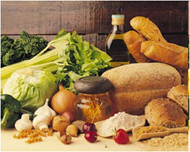
image These whole grain foods likely are not out to trick you. It doesn’t matter if they are quick-cooking, instant, or regular; they are still a whole grain! This is surprising to many people who think they must have slow-cooking brown rice or oatmeal for it to be healthy. Not so! Instant rice is “parboiled” meaning it’s partially cooked already. Quick-cooking oatmeal is just smaller than regular oatmeal, so it cooks faster.

Tricky sources: Bread, cereal, crackers, granola bars, tortillas, barley, pasta

image

May NOT be a good source of whole grains!

These products may be out to trick you. Here are some tips that can help you find good sources of whole grains:

  • Bread: Should have 100% whole wheat or 100% whole grain on the label.  Bread that looks brown and is called “wheat” or “multigrain” may NOT be a whole grain. Bread manufacturers often color white bread brown with molasses  and call it “wheat.”
  • Cereal: The first ingredient listed should imagehave the word “whole” in it, like “whole wheat,” “whole oats,” or “whole grain corn.” Ideally, it contains no refined or “enriched” grains in the label, and it also is low in sugar. Post Shredded Wheat, Quaker Oatmeal Squares and Barabara’s Shredded Oats are some of my favorite whole grain cereals.
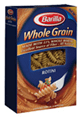
  • Pasta: Most pasta is made from “durum wheat” which is not a whole imagegrain.  However, whole grain pastas are being offered more frequently in grocery stores. Barilla Whole Grain Pasta and Rozoni Healthy Harvest are blends of whole wheat and regular durum wheat. Other less common brands offer 100% whole wheat pasta: keep your eyes peeled!
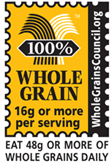
  • Crackers, granola bars, tortillas and other products: For these products, use the first ingredient method: make sure the first ingredient listed is a “whole grain,” and ideally the product contains no “enriched” grains in the label is low in sugar. Sometimes, these imageproducts will have a whole grain stamp that tells you how many grams of whole grains it contains. Compare this number to the total number of carbohydrates. The closer the 2 numbers are, the better; that means the product is mostly made of whole grains. Some of my favorite whole grain-containing products include Triscuts and Nature Valley granola bars.
I hope this post will help you to identify some good sources of whole grains. What are some of your favorite whole grain foods?

For a list of products containing whole grains, check out this site.

The Persimmon Post

Until a couple years ago, I had never tried a persimmon. Today, they are one of my favorite fall fruits! Here is everything you need to know about persimmons:

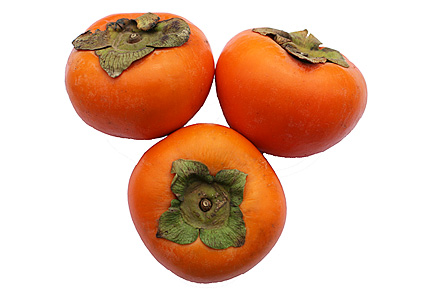
image Fuyu persimmons are squattier than Hachiya persimmons and are flat on the bottom. Fuyus taste great raw, they have a sweet, cinnamon flavor
and a crunchy texture. This is my favorite type of persimmon.

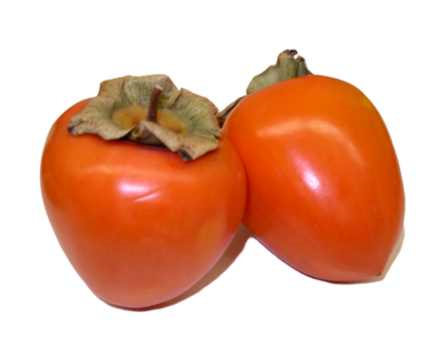
Hachiya persimmons are heart-shaped. imageHachiya persimmons are ripe when they are very soft, and are great for baking! Try adding Hachiya pulp to cookies, muffins and quick breads.

Fun Persimmon Facts:

  • If you cut a persimmon length-wise, there is a star shape in the middle!
  • Persimmons are Japan’s national fruit.
  • Persimmons are a great source of fiber and Vitamin A.

Try my Fall Morning Oatmeal recipe, which is made with Fuyu persimmons!

Fall Morning Oatmeal

Here’s a breakfast recipe that is quick, simple and every delicious bite tastes like a fresh fall morning! If you haven’t tried a persimmon before: you really must! I had never tried one until I came to California. Fuyus are my favorite variety. They have a sweet cinnamon flavor, and are ripe when still crisp.

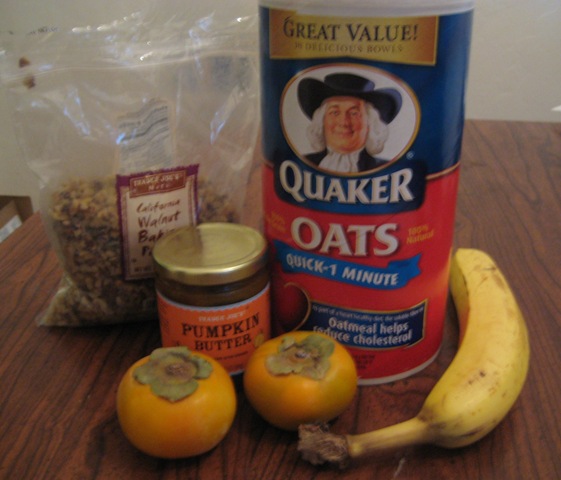
Here are the ingredients:

IMG_1051

  • 1/2 cup Oatmeal
  • 1 banana chopped
  • 1 Fuyu persimmon, chopped (or 1 Hachiya persimmon very soft with skin removed)
  • 3/4 cup skim milk
  • 1 Tablespoon pumpkin butter (I bought mine at Trader Joe’s)
  • 1 Tablespoon chopped walnuts
  • 1/2 teaspoon of cinnamon

Optional ingredients:

  • 1 Tablespoon ground flaxseeds
  • 1 Tablespoon hemp protein powder

Directions:

  1. Mix dried oatmeal, banana, persimmon, and milk. Heat in the microwave for about 3 minutes if Quick Cooking Oats, longer if Old-Fashioned.  Oatmeal should be warm and soft, and fruit should smell sweet and delicious.
  2. When cooked, stir in pumpkin butter, walnuts, cinnamon and optional ingredients. Enjoy!

IMG_1047

Should You Be Taking Vitamins?

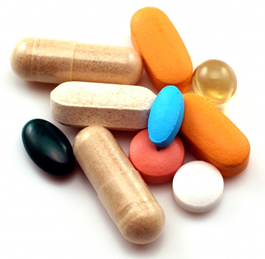
image It’s a question I have been asked numerous times before, “Why do I need to eat a bunch of fruits and vegetables when I can just take a multivitamin everyday?” The answer: fruits and vegetables contain an incomparable nutrition package. They contain nutrients we are only just beginning to discover and understand, such as phytochemicals and other antioxidants. And, they contain these elements in perfectly proportioned amounts, that our bodies have evolved to absorb and utilize optimally. Vitamins, on the other hand, contain large amounts of relatively few nutrients, most of which will leave our bodies unabsorbed.

I am a big advocate of getting as much of your nutritional needs as possible from food.  Personally, at this stage of my life, I do not take any vitamin supplements. I eat a balanced diet, and I feel confident that I’m getting everything my body needs from my food.  Vitamin supplements are no excuse for a poor diet! That said, there are certain people that may benefit from taking vitamins.  Women who are pregnant, or who might become pregnant, may likely benefit from a prenatal vitamin.  Elderly people and very petite women who have lower calorie requirements may find it difficult to obtain all the nutrients they need from their food, and may benefit from a daily multivitamin.  Young girls who are lactose intolerant or do not consume much dairy may benefit from a calcium supplement to ensure they reach their peak bone mass. (These are just some examples. If you are unsure about your own vitamin/mineral needs, talk to your doctor.)

Additionally, some vitamins have toxic upper levels that you dimageo not want to  surpass by taking vitamins.  In particular, fat soluble vitamins (Vitamins A,D,E and K) have toxic upper limits.  If you are taking mega-doses of any of these vitamins, you may want to reconsider.  Also, don’t forget that many foods these days are fortified with vitamins (breakfast cereals, power bars, weight loss shakes, etc.), so be sure to factor those into your count.

So, to sum it up: Get your vitamins from your food first! Then supplement if you still need to, but don’t overdo it.

Corporate Wellness: Why Every Company Should Have a Program

Corporate wellness is an emerging trend, and one of my primary areas of  interest.image

What is “Corporate Wellness?”

Corporate wellness is the integration of preventative health services into the workplace.  It can include health fairs with preventative medical screenings, lunch-and-learn presentations by health professionals, health coaching, and behavior change challenges.

Why the workplace?

Current research shows that every $1 spent on a corporate wellness program saves employers an average of $6 in health care costs and regained productivity. According to the Texas Commissioner of State Health Services, “The link between employee wellness and the bottom line is clear and consistent. Employers who integrate wellness in their overall objectives find they experience reduced absences, better morale, reduced health risks, and reduced health-care costs.”  Employee health care costs are on the rise. Currently, employers spend an average of $5000 each year per employee on health care costs. Less than 5% of those costs go to preventative care.  Now is the time for companies to invest in a corporate wellness program for their employees.

A Few Success stories

  • Johnson & Johnson claims to have saved $38 million in health-care costs for its employees between 1995 and 1999 by promoting healthy lifestyles. Medical expenses decreased $224 per employee per year (averaged over four years), and this rate improved over time.
  • The City of Fort Worth implemented a corporate wellness program for its employees that decreased the number of employees considered “high-risk” from 56% to 22% in 3 years.  Their program offers a variety of free wellness and health-promotion services including lunch seminars, disease management programs, walking groups, and monetary incentives for participating in health screening fairs.

I recommend worksite wellness programs follow a Health at Every Size approach.

Resources:

For more information on corporate wellness, check out any of these resources:

Exclusive Interview with America’s Nutrition Expert!

image

Mitzi Dulan, RD, CSSD is a highly-regarded expert in the field of nutrition, exercise, and wellness.  She is the dietitian for the Kansas City Chiefs and the Kansas City Royals, and co-author of the new book The All Pro Diet  (co-authored with NFL star Tony Gonzalez). Mitzi is also a cutting-edge nutrition entrepreneur and the owner of NutritionExpert.com.

I have been getting to know Mitzi over the past couple of months as one of her Virtual Interns. I have learned a lot from Mitzi, and wanted to share some of that information with you! So, Mitzi agreed to do an exclusive interview for my blog. Enjoy!

1. Tell us a little about your nutrition philosophy.

I want people to understand that you get out what you put into your body. I encourage people to eat foods with simple ingredients that are easy to pronounce. Actually, when you eat foods that are “closer to the ground” they taste better and provide whole food energy and nutrients. I also believe food should be an enjoyable part of life and it’s okay to indulge in your favorites from time to time.

2. What is it like being the RD for the KC Chiefs and Royals? What are some of the best parts? Biggest challenges?

I have always been a huge sports fan and grew up a Chiefs and Royals fan so sometimes I do pinch myself as I am very grateful for the opportunity to work with the players. The best parts are when you help a player improve his diet and he sees results. I also enjoy going to the games. The biggest challenges are when you want to help a player lose weight to hopefully help extend their career and decrease injuries but he hasn’t yet committed to putting in the extra effort to execute.

3. What is your favorite (or most important?) part of your new image book, The All Pro Diet?

Getting people to pay attention to how they are fueling their bodies. I am an advocate of pure, real foods and avoiding artificial ingredients.  Also, one of my favorite parts about publishing a book has been to get emails from people all over the country sharing their successes with me. It is an unexplainable feeling to read those emails. Very rewarding!

4. What advice would you give to a budding young entrepreneur?

Don’t get discouraged by hearing the word “no”. In fact, the more “no’s” the better. It means you are working hard. Pick up the phone and tell people what you want. Be persistent and always do what you say you will do. Hang around positive people.

5. What are your top 3 favorite foods?

Ice cream, strawberries, good cheese!

To learn more about Mitzi, go to NutritionExpert.com. Also, be sure to check out Mitzi’s blog for the latest nutrition info and useful wellness tips at NutritionExpert.com/blog.

Hemp Protein- Should you try it?

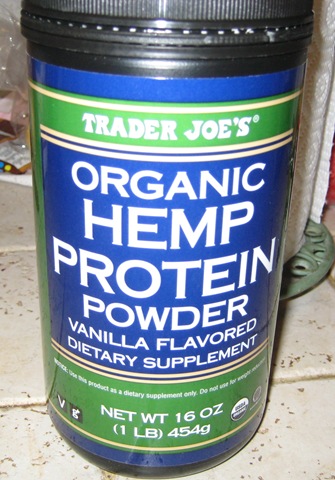
IMG_0954Although I’m not usually an advocate of supplements, after reading the All Pro Diet by Mitzi Dulan, “America’s Nutrition Expert,” I decided to try hemp protein powder.  The All Pro Diet recommends including protein and fiber at every meal to maximize satiety.  For me, breakfast was lacking in the protein department, so I decided to give hemp protein a whirl, as it was recommended in the book.

Hemp protein, as the name suggests, comes from the hemp plant. It is high in fiber and protein, and also is a good source of omega-3 fatty acids. So, the nutritional breakdown is pretty impressive. I picked some up at Trader Joe’s for $9.99 for 1 pound.  It is brownish-green in color. 

I tried it out by adding it to my morning oatmeal. It added a slightly earthy flavor to the oatmeal, and turned it a slightly darker color, but otherwise didn’t seem to affect the texture or flavor.  I’m not sure how it affects my satiety levels yet.

Has anyone else ever tried hemp protein? How do you use it?

High Fructose Corn Syrup: Innocent or Evil?

The claims made imageabout high fructose corn syrup (HFCS) range from it being a natural sweetener that gives cookies a soft texture, bread a brown color and promotes freshness and stability in all food items, to an unnatural poison that is the primary cause of the obesity epidemic in the United States. The truth is probably somewhere in-between. Here are the facts so that you can decide for yourself.

High fructose corn syrup was introduced in the 1970s and today is used in many consumer food items, including many brands of bread, yogurt, soft drinks, fruit juices, jam, ketchup, cereal, soup and even meat products. Using HFCS instead of sucrose saves companies about one cent per ten teaspoons used, which is equivalent to about one 12 ounce can of soda. This, in addition to the long shelf life of HFCS, is the primary reason companies use HFCS to sweeten their products.

There has been research showing that fructose is processed differently than other sugars in the body: it is more readily converted to fat and fails to trigger the release of appetite suppressing hormones like insulin and leptin. HFCS is a mixture of fructose and glucose, made either in a 55-45 fructose to glucose ratio (the kind found in soft drinks) or a 42-58 fructose to glucose ratio (the kind typically found in baked or canned goods). Is this an abnormally high level of fructose? Well, sucrose (common table sugar) is a 50-50 mixture of fructose and glucose, so, structurally, they are pretty similar. This makes it difficult to claim HFCS is much worse than normal table sugar without further research.

The rise is usage of high fructose corn syrup mirrors the rise in obesity in the  United States, leading some people to believe that high fructose corn syrup is a major cause of the obesity epidemic. imageHowever, other trends must be considered as well, such as the increase in serving sizes, decrease in exercise, mass advertising of soft drink and fast food companies, and the implementation of vending machines in schools.

The USDA recommends that we limit added sugar of any form to 10 teaspoons (40 g) a day. This does not include the sugars found in milk, fruit and vegetables, of which Americans should be eating more. In 2000, Americans ate an average of 31 teaspoons of added sugar per day. Clearly, more research needs to be done on high fructose corn sugar. In the meantime, we need to cut down on the amount of added sugars we eat, high fructose corn syrup and other forms alike.

What are your thoughts and opinions on HFCS?