Category Archives: Nutrition Info

5 Healthy Meals in 5 Minutes or Less

image Yesterday I gave a cooking demonstration to a group of seniors in Sacramento called Heart Healthy Cooking for One.  The recipes were so popular, easy to make, and delicious, that I thought I would share them on my blog! Each recipe takes 5 minutes or less to prepare, so it’s perfect for when you want to whip up a quick and healthy breakfast or lunch for yourself.  There is also a convenient vegetable cooking chart for the microwave at the end. Check them out, in easy printable format: 5 Meals in 5 Minutes or Less.

These recipes are all easily prepared using a George Foreman grill and a microwave.  If you don’t have a George Foreman grill, you can use a skillet on the stove.  But, I highly recommend a George Foreman grill because they are so easy to use!  I just use a small one that costs less than $20 at Walmart or Target.

All of these recipes are very heart healthy.  The characteristics of a heart healthy meal are:

  • Low in fat (especially saturated and trans fat)
  • Low in sodium
  • High in fiber

Heart disease is currently the #1 killer in America. But, 80% of heart disease is preventable through healthy lifestyle choices! So, I hope you enjoy these delicious heart healthy recipes!

Like this post?  You may also enjoy:

Video: Cutting Back on Salt in Your Diet

The average American consumes double the recommended upper limit of sodium.  Excess sodium in your diet can contribute to high blood pressure. Take a look at this 2-minute video clip which give tips to help you cut out some extra sodium in your diet.

Boost Your Health with Delicious MediterrAsian Recipes!

The Mediterranean and Asian diets are two of the healthiest diets world-wide.  Compared to people with typical “Western” lifestyles, people with Mediterranean or Asian lifestyles tend to live longer, healthier lives.

Mediterranean and Asian dishes are flavorful, delicious, and extremely healthy. So, why not add some delicious Mediterranean and Asian recipes to your repertoire? I recently discovered MediterrAsian.com and it has introduced me to a wide array of new, delicious recipes!  Although many of the recipes contain some new ingredients, I have found all of the recipes so far to be very do-able. And, if you just can’t find an ingredient (like fish sauce), no worries! It will still taste scrumptious without it.

Check out some of the recipes I’ve tried:

image

Thai Red Chicken Curry: “Melt-in-the-mouth morsels of chicken breast and assorted vegetables cooked in a spicy Thai red curry sauce and served with fluffy Jasmine rice.”

My assessment: Great!  I added some extra veggies as well, like eggplant and spinach.  Go easy on the curry if you’re sensitive to spice!

image

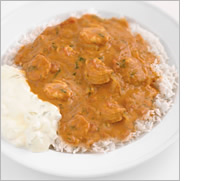
South Indian Shrimp Curry. “Tender shrimp gently  poached in an a flavorsome gravy infused with an aromatic blend of spices, fresh cilantro and lemon juice served over Basmati rice.”

My assessment: Very good, but the shrimp flavor was a little overpowering. Next time, I’ll try with chicken.

image

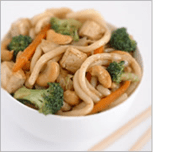
Tofu & Cashew Chow Mein. “Crunchy cashews and vegetables complement the soft texture of the noodles and tofu in this quick and satisfying dish.”

My assessment: Terrific! This one has become a regular on my menu. I use whole wheat spaghetti instead of the chow mein noodles, and usually sub peanuts for the cashews.

image

Spanish Broccoli & Almond Soup: “The combination of ground almonds and broccoli makes a deliciously creamy, yet creamless soup with a rich, green color.”

My assessment: I was surprised to find… I really liked this soup! At first, when I was boiling all the ingredients, I thought uh-oh—this stuff looks (and smells) pretty nasty. I didn’t see how in the world pureeing it all in a blender would save the soup, but low and behold, it did! Over the week, I enjoyed every last drop of the entire pot. So, now matter how sketchy it looks when you’re cooking it—finish it!

So, there you have the 4 dishes I have tried, and many more are on my future line-up! Have fun browsing all of their awesome recipes at http://www.mediterrasian.com/delicious_recipes.htm.

How to Live to Be 100

In this video, Dan Buettner shares the secrets of communities where residents live to be 100+ much more frequently than the rest of the world. The individual stories of people who are still filled with vitality after age 100 are inspiring.

It is definitely worth 20 minutes of your time to watch this video.  But, if you cannot, Garr Reynolds summed up the longevity secrets onto one slide:

image

Source: http://www.presentationzen.com/

10 Healthy Foods You Can Cook in the Microwave

image Cooking food in the microwave is easy, healthy, environmentally-friendly and delicious! Here’s why microwave cooking is:

  • Healthy: Unlike some other methods of cooking (such as boiling), microwave cooking allows foods like fruits and vegetables to retain most of their healthy vitamins and minerals. Additionally, microwave cooking very compatible with a low fat diet because food does not require the addition of excess fat to cook food.
  • Environmentally-friendly: Microwave cooking is energy efficient! It conserves energy by only heating up the food within it, and not the rest of the house.

Below are my favorite 10 healthy foods you can cook in the microwave.  Bon appétit! image

  1. Oatmeal: Oatmeal is my favorite breakfast food.  Quick cooking oats,  combined with low fat milk and chopped fruit, cooked for 4 minutes in the microwave make for a delicious morning! Try my Fall Morning Oatmeal recipe.
  2. Spinach: This nutrient-packed superfood cooks in the microwave in less than 1 minute! Try this 20 second recipe or my new favorite: top spinach with a little peanut vinaigrette (like the kind at Trader Joe’s shown here) and sprinkle with peanuts. Microwave for 30 seconds. Yum!
  3. Fruit “Cobbler:” This is one of my favorite heart-healthy desserts!   Combine fresh or frozen bite-sized fruit pieces in a microwave-safe bowl (banana slices, apple chunks, blueberries, strawberry slices, peach slices, etc.).  Microwave on high until fruit is hot and soft. Top with granola and fat free whipped cream. You’ll love it!
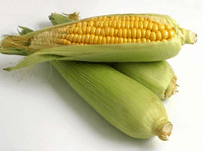
  4. imageCorn on the Cob: One of my summertime favorites. Place peeled, rinsed corn cobs on a microwave-safe plate, and nuke until cooked! (About 4-5 minutes per cob.)  In Mexico, they squeeze fresh lime juice on corn rather than butter. Give it a try!
  5. Green Beans: Rinse green beans and microwave on a plate until bright green, about 1 minute per handful of beans. Fresh green beans are one of my favorite veggies- so much tastier than canned!
  6. Fish: Finally, an easy way to cook and enjoy fresh fish! My favorite method is to cook fish for 1 minute on my George Forman grill, and then finish cooking in the microwave. Check out my easy recipe for Grilled Salmon!
  7. Popcorn: Did you know that popcorn is a whole grain? Choose a microwavable popcorn brand that is low in fat and sodium, and cook according to directions.
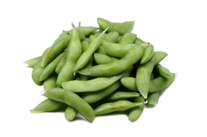
  8. imageSoybeans: Also known as edamame, soybeans are a delicious, protein-packed, fiber-filled snack! Buy frozen edamame in the grocery store, and cook in a microwave safe bowl with just a little bit of water until warm. Discard the water. Top with just a pinch of salt.  If they are in the pods, pinch the beans out of the pods before you eat them!
  9. Whole Wheat Couscous: Couscous is a Mediterranean grain that is basically teeny-tiny pasta. Honestly, I usually cook it on the stove, but it is just as simple to cook it in the microwave.  Heat 1 and 1/4 cup of water in the microwave until boiling. Add one cup of cous-cous, stir and cover. Let it sit for 5 minutes, and then fluff with a fork and serve.  For a ton of couscous recipes, check out this Food Network link.
  10. Eggs: There are many imagedifferent ways of preparing eggs using a microwave, but my favorite is poached eggs! Poaching eggs is a very healthy way to prepare eggs, because it requires no added fat. Here is a great video on how to poach eggs in the microwave.

Like this post? You may also enjoy:

The Real Cost of Cheap Food

Americans spend a lower percentage of income on food than any other nation.  As a result, our food system has shifted to low-quality, calorie-dense foods.  See what it is doing to our health… check out the below 2 minute video.

Do We Really Need Our 3 Daily Servings of Dairy?

Up until very recently, I have always believed that 3 servings of dairy per day is absolutely essential for good bone health.  However, during my public health nutrition class last semester, some interesting discussions took place that revealed this notion may in fact be false. Two of my classmates did some enlightening research on the subject, and they have permitted me to share their findings with you today.  Each of the below slide shows argues one side of the dairy debate. Then, you can decide for yourself whether or not 3 daily servings of dairy is an appropriate recommendation. Share your thoughts in the comments section!

Unfortunately, the pro-dairy slide show keeps causing my internet to crash. You can view it at http://www.slideshare.net/NicoleGeurin/presentations.  The presentation is titled Benefit-risk Assessment for Including Dairy Foods in the Diet.

Swedish Dietary Guidelines May Go Green

Sweden is testing out an experiment, which, if successful, may lead to the adoption of the first environmentally-conscious dietary guidelines. The proposed guidelines take into consideration both nutrition and environmentally-friendly choices. Experts estimate that the proposed guidelines could reduce food emissions by 20-50% if followed. Some examples of recommendations include:

  • Eat less meat and poultry, and choose local grass-fed livestock when possible
  • Eat fish that is caught or farmed sustainably
  • Choose locally grown, seasonal and organic produce
  • Choose cereals or potatoes over rice, because their production emits less methane
  • Purchase rapeseed oil over palm oil for both health and environmental reasons; palm oil is high in saturated fat and is primarily cultivated on former rainforest lands
  • Drink tap water over bottled water

Currently, food items in grocery stores and restaurants wear a new labeling description: kg of Co2 emissions. The hope is that, by placing this information on labels and menus, consumers will become more aware of the environmental impact of foods and make choices that are more environmentally-friendly. Is it working? According to Max, a Swedish burger chain, sales of climate-friendly items have risen 20 percent since they started labeling menus with emissions information.

What do you think: would you like to see Co2 emission information on food products? Should the 2010 US Dietary Guidelines “go green?”

References:

Rosenthal, Elizabeth (2009). “To Cut Global Warming, Swedes Study Their Plates.” The New York Times. Accessed on November 1, 2009 from:

http://www.nytimes.com/2009/10/23/world/europe/23degrees.html?pagewanted=1&_r=1&ref=dining

Livsmedels Verket National Food Administration. “The National Food Administration’s environmentally effective food choices: Propsoal notified to the EU.” Accessed on November 1, 2009 from: http://graphics8.nytimes.com/packages/pdf/science/sweden_foodguidelines.pdf

Will the Real Whole Grain Please Stand Up?

image

Which of these is a whole grain? The answer might be neither.

The importance of eating whole grains is becoming increasingly apparent as studies continue to uncover the health benefits associated with whole grains. Whole grains have been shown to reduce the risk of stroke, heart disease, diabetes, eye degeneration, and cancer, to name a few. But which grains are really whole? Some food manufacturers are out to trick you. This article will help you to identify which foods are good sources of whole grains, and which are only posing as whole grains.

First, a quick anatomy lesson on whole grains. A whole grain contains 3 parts: the  bran, the germ and the endosperm. A refined grain (such as white bread and white rice) has the bran and the germ removed, leaving only the starchy endosperm. Unfortunately, the bran and the germ contain the majority of the fiber, vitamins and minerals. So when you eat a refined grain, you’re missing out on these nutrients!

image

Now, lets do some detective work. How can you identify the real whole grains?

Safe sources: Brown rice, oatmeal, popcorn, quinoa, 100% whole wheat flour, wild rice, bulgur, wheatberries
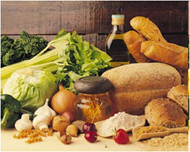
image These whole grain foods likely are not out to trick you. It doesn’t matter if they are quick-cooking, instant, or regular; they are still a whole grain! This is surprising to many people who think they must have slow-cooking brown rice or oatmeal for it to be healthy. Not so! Instant rice is “parboiled” meaning it’s partially cooked already. Quick-cooking oatmeal is just smaller than regular oatmeal, so it cooks faster.

Tricky sources: Bread, cereal, crackers, granola bars, tortillas, barley, pasta

image

May NOT be a good source of whole grains!

These products may be out to trick you. Here are some tips that can help you find good sources of whole grains:

  • Bread: Should have 100% whole wheat or 100% whole grain on the label.  Bread that looks brown and is called “wheat” or “multigrain” may NOT be a whole grain. Bread manufacturers often color white bread brown with molasses  and call it “wheat.”
  • Cereal: The first ingredient listed should imagehave the word “whole” in it, like “whole wheat,” “whole oats,” or “whole grain corn.” Ideally, it contains no refined or “enriched” grains in the label, and it also is low in sugar. Post Shredded Wheat, Quaker Oatmeal Squares and Barabara’s Shredded Oats are some of my favorite whole grain cereals.
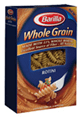
  • Pasta: Most pasta is made from “durum wheat” which is not a whole imagegrain.  However, whole grain pastas are being offered more frequently in grocery stores. Barilla Whole Grain Pasta and Rozoni Healthy Harvest are blends of whole wheat and regular durum wheat. Other less common brands offer 100% whole wheat pasta: keep your eyes peeled!
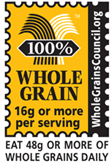
  • Crackers, granola bars, tortillas and other products: For these products, use the first ingredient method: make sure the first ingredient listed is a “whole grain,” and ideally the product contains no “enriched” grains in the label is low in sugar. Sometimes, these imageproducts will have a whole grain stamp that tells you how many grams of whole grains it contains. Compare this number to the total number of carbohydrates. The closer the 2 numbers are, the better; that means the product is mostly made of whole grains. Some of my favorite whole grain-containing products include Triscuts and Nature Valley granola bars.
I hope this post will help you to identify some good sources of whole grains. What are some of your favorite whole grain foods?

For a list of products containing whole grains, check out this site.

The Persimmon Post

Until a couple years ago, I had never tried a persimmon. Today, they are one of my favorite fall fruits! Here is everything you need to know about persimmons:

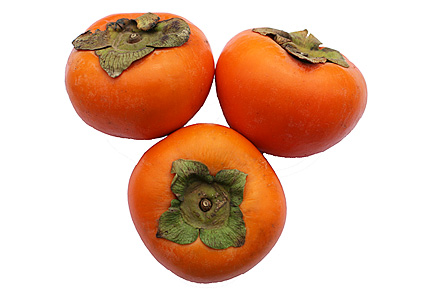
image Fuyu persimmons are squattier than Hachiya persimmons and are flat on the bottom. Fuyus taste great raw, they have a sweet, cinnamon flavor
and a crunchy texture. This is my favorite type of persimmon.

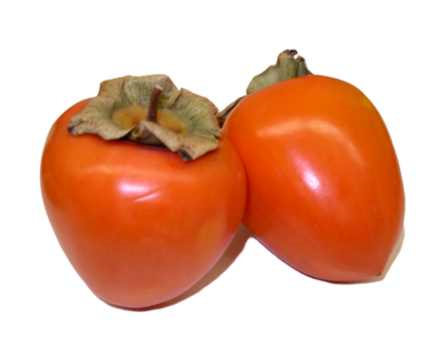
Hachiya persimmons are heart-shaped. imageHachiya persimmons are ripe when they are very soft, and are great for baking! Try adding Hachiya pulp to cookies, muffins and quick breads.

Fun Persimmon Facts:

  • If you cut a persimmon length-wise, there is a star shape in the middle!
  • Persimmons are Japan’s national fruit.
  • Persimmons are a great source of fiber and Vitamin A.

Try my Fall Morning Oatmeal recipe, which is made with Fuyu persimmons!